
/Industry4 min read
Agentic search: The New Web Infrastructure for Super Intelligence
Agentic search is driving a new shift in what businesses can do. This blog explores how different industries are using it, why the economics matter, and where to start.

Major shifts in software happen when new infrastructure changes what businesses can do. In my experience, MongoDB changed how companies store data. Elasticsearch changed how they find it, and dbt Labs changed how they transform it. Today, I can already see the next infrastructure shift underway.
A new operating model is emerging. Companies are turning research-intensive work like searching across sources, evaluating information, and synthesizing findings into workflows that software can execute. But, for models to perform that work, they need access to relevant, current information at the moment it’s needed.
That's why agentic search is driving the new infrastructure shift. Products like Tavily enable AI systems to find, understand, and use information as part of completing a task. The result is super intelligence.
Organizations building this capability into their workflows now can operate faster and more efficiently. Those that continue to rely on manual research risk falling behind competitors that can identify opportunities, assess risks, and act on new information at AI speed.
Everything from finding information to completing work
Traditional search gives people a list of links, leaving them to decide what matters, piece together the findings, and take action. Agents engage with the internet differently.
An agent researching a prospect can identify recent developments, decision makers, hiring, funding, and competitive activity, then turn those signals into an account brief your team can use. In many workflows, that can compress hours of manual research into minutes. Moving more of the work to an agent while keeping your people focused on the decisions that require their judgment is where the real opportunity lies.
One capability, different business outcomes
The underlying technology may be the same, but its value looks different across teams and industries. Here are four examples of organizations using agentic search, improving how some of their most research-intensive work gets done:
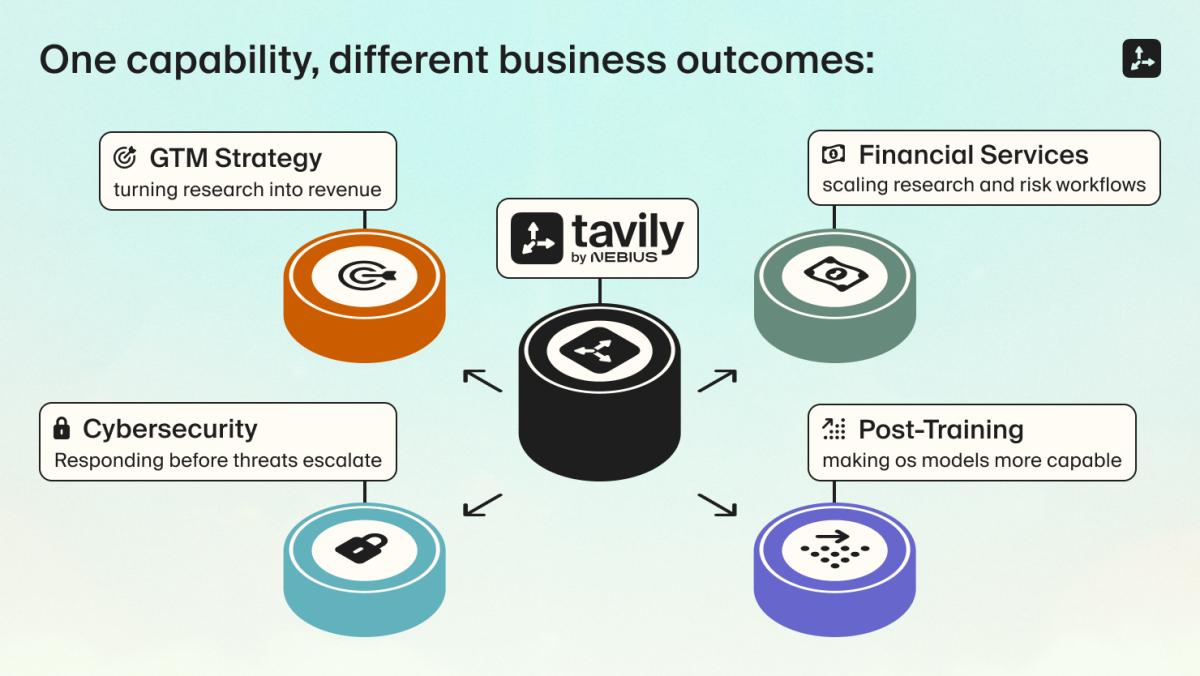
1. GTM: Turning research into revenue
Your sales team can pull account information from internal systems, company websites, news, job postings, and other sources. An agent can bring those signals together and turn them into something a seller can use.
At Rox, agentic search with Tavily helped cut account research from weeks to seconds. The same approach can support prospecting, account planning, opportunity identification, and personalized outreach, giving sellers more time to sell.
2. Financial services: Scaling research and risk workflows
In financial services, AML investigations, fraud analysis, transaction monitoring, market research, and risk assessment all require people to gather and evaluate information from multiple sources, while staying in compliance.
Agentic search can take on much of that research while keeping humans focused on judgment and exceptions.
BMO uses Tavily as a data retrieval utility in high-volume AML workflows, reaching hundreds of thousands of monthly queries. The work supports an AML risk-scoring model and provides a common search and web retrieval layer for agents across the bank. This allows the bank to scale research without scaling manual effort at the same rate.
3. Cybersecurity: Responding before threats escalate
Cybersecurity teams need current information about domains, IP addresses, vulnerabilities, threat actors, and emerging threats. When agents gather and connect that information during an investigation, analysts can move more quickly from alert to action.
At Bell Cyber, automation with Tavily helped cut response times by 6x without adding headcount. They also found investigations are often completed before a ticket is even opened.
4. AI Development: Making OS Models More Capable
Models are trained on enormous datasets, but the information businesses care about keeps changing. AI developers need access to current evidence during post-training, evaluations, and model development.
NVIDIA's work on Nemotron 3 Ultra, which uses Tavily inside post-training and evaluation, is an early example of this shift. Bringing current information into the development process gives teams another way to improve how models find and use evidence and increases how fast they can do it.
The economics matter
At scale, inefficient retrieval gets expensive. The web is full of navigation, advertising, duplicated content, and poorly structured pages that consume tokens and processing time without helping an agent complete its task.
Tavily filters, ranks, and structures web content for AI systems, returning relevant information without pushing as much noise downstream. With fewer tokens to process and less irrelevant information to reason over, models can respond faster and at a lower cost.
Across thousands or millions of queries, those efficiencies compound. Faster retrieval, cleaner inputs, and less human intervention can make the difference between a promising AI demo and a production system that can run across your business.
Where to start with agentic search
Agentic search is being used by AI teams, and is becoming part of how companies research markets, assess risk, investigate threats, and build better AI systems.
You don’t have to redesign every workflow at once. Start where research is repetitive, depends on current external information, and leads to a measurable outcome. Establish a baseline for time, cost, and quality, then expand into adjacent workflows once the value is clear.
The question for leaders is no longer whether their organizations will use agentic search, but which workflows they’ll transform first, and how much ground they’ll give up if they wait. Companies that start now aren’t just adopting a new tool. They’re building processes and operational experience that will become harder for competitors to match as agentic search becomes standard infrastructure.
If you haven’t already, you can test the difference real-time web search makes for your agents. Sign up for a free Tavily account and you get 1,000 credits per month.